Art
Marco Baragli’s Book Review of L’Araba Felice
Marco Baragli reviewed the new book and Illustrated Volume “L’ Araba Felice” by of Marilù Dell’Aquila (Malatesta Publishing, Apricena, FG, 2025).
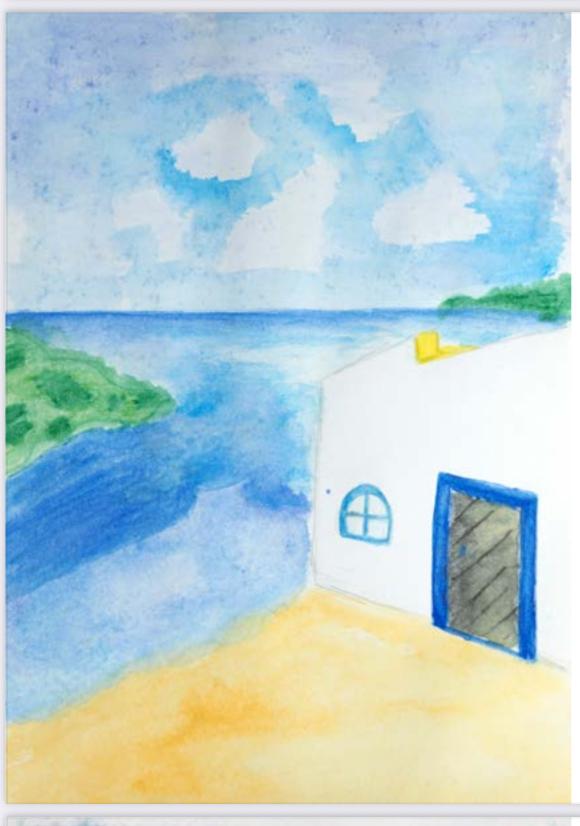
The poetic and illustrated volume L’Araba Felice by Marilù Dell’Aquila stands as a work of profound emotional and symbolic intensity, where word and image intertwine to narrate a personal journey of rebirth. It is not merely a collection of poems, but a diary of the soul—an alchemical voyage through pain, loss, awareness, and ultimately joy. With an authentic voice and inner vision, the author constructs a poetic universe that reflects itself in her watercolors, born from a synesthetic and meditative process.
Poetic Language as a Tool for Transformation
Marilù Dell’Aquila writes with a voice that is both confession and invitation. Her poems do not simply describe emotions—they embody them. Pain is not just narrated, but lived; rebirth is not merely hoped for, but achieved. In texts such as “Nel mare che ho dentro” (“In the Sea Within Me”) or “Mi sono svegliata” (“I Woke Up”), the poet explores the depths of the soul, confronting fear, abandonment, and solitude. Yet it is precisely from these depths that light emerges: “In the sea within me / my soul sparkles.” Poetry thus becomes a tool for healing, recognition, and liberation.
The Role of Watercolors: Images as Extensions of the Soul
The watercolors accompanying the poems are not mere illustrations. Marilù recounts how she created them after recording her poems, listening to them with closed eyes and allowing colors to emerge spontaneously. This process reveals a deep connection between word and image, where color does not illustrate but interprets. The watercolor becomes a form of visual writing, an emotional translation of the text.
For instance, the poem “Fuoco o brace” (“Fire or Ember”) reflects on time and the intensity of emotions: fire burns, ember endures. The accompanying watercolor might depict a flame transforming into a steady glow, red fading into orange, then into ash. Here, color becomes narrative: it tells of resilience, the capacity to endure without being consumed.
In “Remi in barca” (“Oars in the Boat”), the protagonist is a sea warrior who, after storms, lets herself be carried by the current toward the right harbor. The visual image might show a solitary boat on a rough sea, with a horizon opening and a sky clearing. Color here is hope, direction, arrival.
Recurring Symbols: Sea, Fire, Door
Three major archetypes run through the work: the sea, the fire, and the door. The sea is the dominant element, present in titles, metaphors, and images. It is the unconscious, the cradle, the storm, the refuge. In “Il mare è” (“The Sea Is”), it becomes friend, embrace, balm. It is the place where everything dissolves and everything recomposes.
Fire is the transformative force, the necessary destruction for rebirth. In “Dopo la pioggia” (“After the Rain”), the storm precedes the rainbow. In “Sole sono” (“I Am Sun”), the poet declares herself a beacon, a rediscovered light. Fire burns, but also illuminates.
The door is the boundary between known and unknown, past and future. In “Oltre la porta… papà” (“Beyond the Door… Dad”), the threshold becomes a place of memory and acceptance. In “Aver paura di aprire una porta chiusa” (“Afraid to Open a Closed Door”), closure is renunciation, but also protection. Opening is risk, but also life.
A Poetics of Resilience and Gratitude
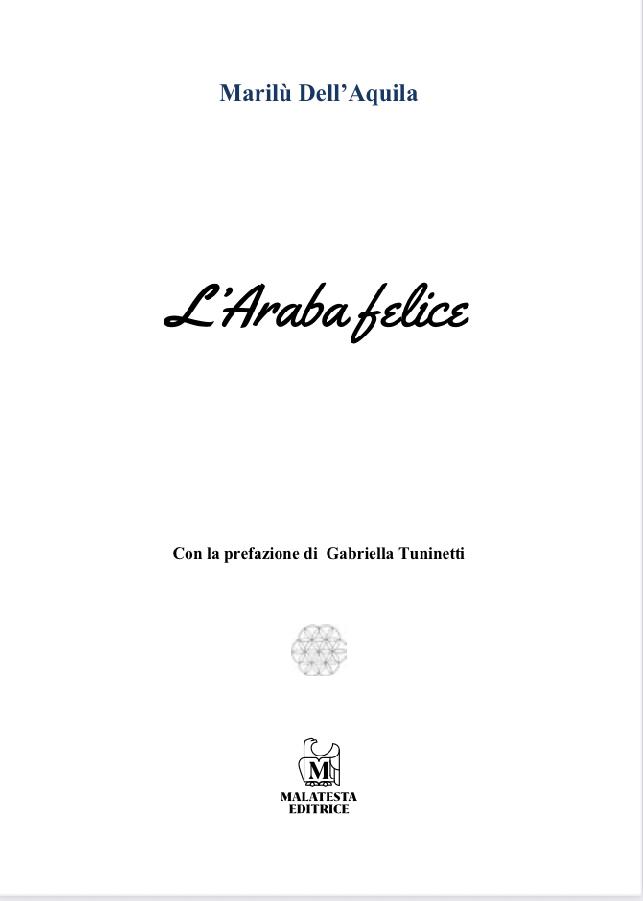
The title itself, L ’Araba felice (“The Happy Arab”), is a poetic declaration. The Arab is not just a phoenix, but happy. The semantic substitution suggests a rebirth not only from ashes, but toward conscious joy. Happiness is not naïve, but earned. It is the fruit of a journey, a struggle, a choice. As the author writes: “My Arab is happy because she is grateful to have received a great gift: herself.”
This poetics of gratitude permeates the entire book. Even in the most painful texts, such as “La perderai” (“You Will Lose Her”) or “Prigioniera” (“Prisoner”), there is always a tension toward light, a will to reclaim. Poetry does not close in lament—it opens to possibility.
A Work That Is Also an Educational Tool
L’Araba felice is a work that can be read, listened to, seen, felt. It is an invitation to immerse oneself, to be traversed, to be reborn. The dialogue between poetry and watercolor offers an extraordinary educational opportunity: it can become a workshop, an educational path, a tool for introspection. Marilù Dell’Aquila shows us that creativity is care, that words are medicine, that color is emotion.
In a time when fragility is often hidden, L’Araba felice exposes it with courage, transforming it into strength. It is a book that is not only read—it is inhabited.
About Marco Baragli
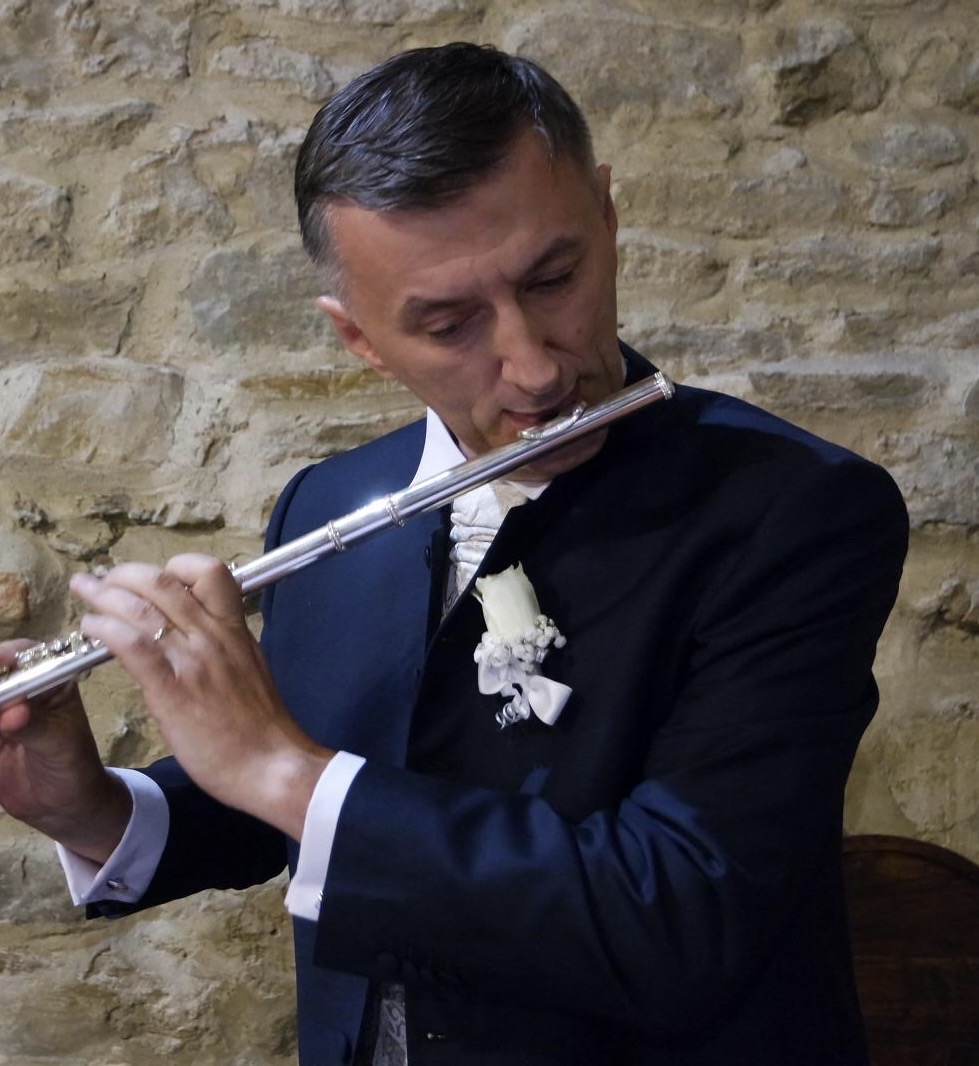
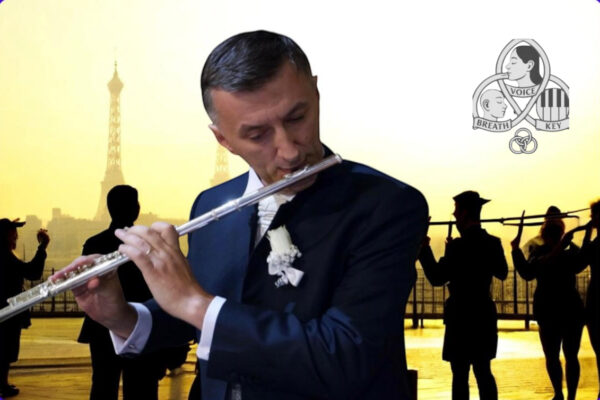
Marco Baragli is an Italian musician and scholar with degrees in Theology, Philosophy, and Flute. An acknowledged expert in symbolism, he was for several years a member of the Association of European Symbolists. His academic work includes numerous articles for prestigious journals, and his writings have been cited in internationally significant publications, as certified by Academia.edu.
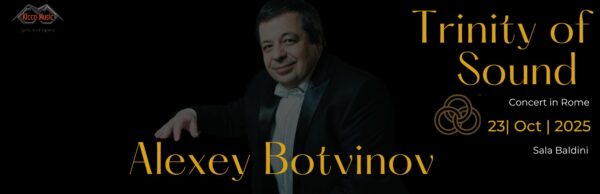
Baragli is the driving force behind Trinity of Sound, an innovative project created in collaboration with renowned Italian soprano Laura Ansaldi. Trinity of Sound is a symbolic and musical journey that unites Voice, Breath, and Key as archetypes of human expression, transforming each piece into an act of inner contemplation. In 2023, Marco Baragli had the honor to perform at the Coronation of King Charles III in England — a historic event witnessed across the globe.